
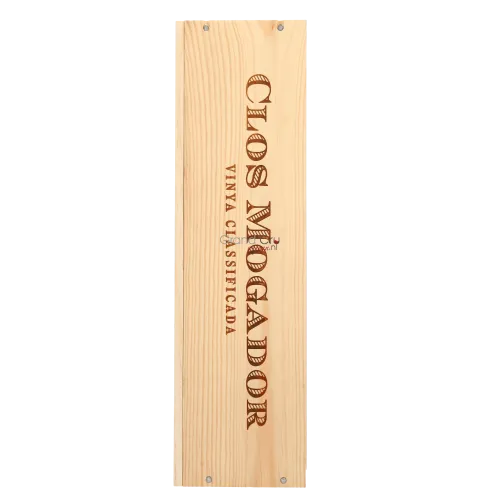
2022 Clos Mogador Magnum
Code: 1955378
· In Stock
$249.98
Select Your Options:
| $249.98 |
Delivery details
Enter destination to see dates & costs
- Description
We don't really need to say much about iconic winemaker René Barbier. His Clos Mogador is perhaps the most famous Priorat wine. It's an organically grown, full-bodied, deep red wine and among the absolute finest from the Priorat. The Clos Mogador is full of ripe black fruit, herbs, minerals, coffee, truffles, beautiful tannins, and a very impressive finish. The Clos Mogador is a blend of Garnacha, Cariñena, Syrah, and Cabernet Sauvignon. The grapes are harvested over a two-month period, as they don't all ripen simultaneously. The grapes are grown biodynamically, with care and respect for the plant and its natural conditions, and all work in the fields is carried out by hand. The grapes come from vineyards on slate terraces, which give the wine that famously pure minerality for which Priorat is renowned. The slate-grown grapes, biodynamic cultivation at Clos Mogador, and the Barbiers' vinification techniques are recognized worldwide as the perfect example of how to create a wine that perfectly encapsulates a terroir with that subtle fusion of fruit and nature. The 2022 vintage is a blend of 45% Garnatxa Negra, 29% carinyena, 16% syrah, 10% Cabernet Sauvignon. The dense, purple-black color of this vintage heralds an impressive bouquet that combines spice, smokiness, and herbs with a lovely hint of toast. On the palate, all these impressions are enhanced by multiple layers of coffee aromas, chocolate, licorice, and ripe, generous fruit. The silky yet persistent tannins are paired with a refreshing acidity . In our opinion, this is a wine that should not be missing in any fine wine collection, and compared to top French or Italian wines, it is still relatively inexpensive. Definitely decant it in its younger years, as this is a wine known to improve for many years to come and has a drinking window until 2035+. This is a 1.5-liter magnum in its original wooden box (OWC/1). Even more delicious and with a longer drinking window. For the first time in Spain, Clos Mogador, one of the prestigious wines made by René Barbier in the DOCa Priorat, has been awarded the prestigious "Vi de Finca" designation. "Vi de Finca" is an additional designation to the DOCa Priorat certification, which already recognizes this wine. Clos Mogador was the first wine to receive this prestigious designation in all of Spain. It certifies that all the grapes used to make this wine have come from Clos Mogador's single vineyard for at least the past five years (five years that can be documented and traced), and is simultaneously awarded to a wine that has enjoyed international renown for more than ten years. FACT: The grapes are pressed using an olive oil press, which only extracts half the grape juice (unlike a conventional press), but this is the most beautiful part, making the wine 50% more concentrated. In the "Attachments" tab, you'll find the official fact sheet for this fine wine. We'll automatically send it to you when you order this wine. The wine is stored in our climate-controlled Wine Warehouse, and if you pick it up, you'll often receive a nice discount . You'll see your discount immediately when you select "Pickup" at checkout. We're located in Dordrecht with ample parking. Click here for our address. René Barbier, along with Carles Pastrana of Clos de l'Obac, Alvaro Palacios (from Rioja , but known for L'Ermita in Priorat), and José Lluis Perez (Clos Martinet, and father of Sarah Perez), is one of the founding fathers of this recently discovered or rediscovered Priorat wine region. Clos Mogador is named after the single vineyard that René Barbier began cultivating in the 1970s, in the now world-famous village of Gratallops. The wines of Clos Mogador have become legendary, like those of Sassicaia from Italy and Château Margaux from France. Clos Mogador has achieved cult status as a major world wine. A unique feature of René Barbier's winemaking: he presses the grapes using an olive oil press, which yields only half the grape juice (unlike a