
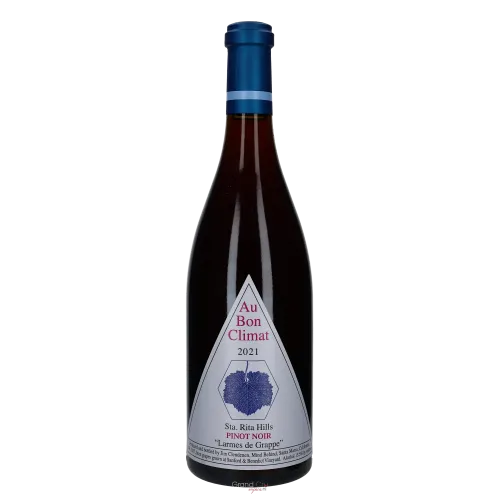
2016 Au Bon Climat Pinot Noir Larmes de Grappe
Code: 1955691
· In Stock
$139.98
Select Your Options:
| $139.98 |
Delivery details
Enter destination to see dates & costs
- Description
History of Au Bon Climat in Santa Barbara County Au Bon Climat was founded in 1982 by Jim Clendenen and, in the decades that followed, became a staple in California for lovers of classic, refined wines. Clendenen drew explicit inspiration from Burgundy, but deliberately chose the cool coastal regions of Santa Barbara County. From the outset, his focus was on balance, freshness, and aging potential, rather than simply ripeness and power. After Jim Clendenen's passing, the winery is being continued by the same dedicated team that has been closely involved in Au Bon Climat's style and direction for years. The wines remain true to the original vision: grape expression, precision, and a clear link to provenance. Pinot Noir and Chardonnay form the core of the range, supplemented by small productions of other grape varieties. Sta. Rita Hills and the cool coastal climate The Santa Rita Hills, situated near the Pacific Ocean, are distinguished by a distinctly cool climate. Morning fog, fresh winds, and relatively low temperatures contribute to a long growing season. This allows the grapes to ripen slowly and retain their natural acidity. This climate is ideally suited to Pinot Noir, where finesse, aromatic tension, and structure are more important than sheer weight. The Sanford & Benedict Vineyard, where this wine comes from, is one of the region's most historic vineyards. The combination of old vines, poor soils, and cool influences produces grapes with concentration and nuance. It's a vineyard known for Pinot Noir with depth and aging potential. The Blue Series within Au Bon Climat Larmes de Grappe is part of the Blue Series, the most exclusive segment within Au Bon Climat. Wines in this series are produced only in years when the grape quality and climatic conditions are exceptional. These are small productions with the strictest selection in the vineyard and special vinification methods in the cellar to achieve extra complexity and structure. The Blue Series showcases the more restrained yet profound side of Au Bon Climat. These wines are made for the serious connoisseur seeking layers of aroma and flavor, and wines that continue to develop over time. The 2021 Larmes de Grappe is a prime example, as it was vinified whole cluster and matured extensively in new French oak barrels. Grape variety and harvest of Pinot Noir Larmes de Grappe The 2021 Larmes de Grappe is made from 100 percent Pinot Noir. Harvesting for this cuvée begins only when the grapes are ripe and the stems are fully lignified. This means the stems have become woody and no longer impart green notes. This combination only occurs in select years, so this wine is not a regular annual bottling. The harvest took place on September 27, 2021. The grapes were hand-picked and carefully selected, with an emphasis on healthy bunches and optimal ripeness. Fermentation and maturation in French oak Larmes de Grappe's vinification focuses entirely on texture and complexity. The wine is always fermented 100 percent whole cluster, without destemming. Fermentation takes place in open vats, with manual fermentation twice a day. This approach requires time and attention, but yields ripe tannins and a refined structure. After pressing, the wine is only separated from the coarse lees and then aged for 20 months in brand new 350-liter François Frères French oak barrels. The wine is lightly fined with egg white and bottled unfiltered to fully preserve its aroma and texture. Color, aroma and taste of the 2021 Larmes de Grappe In the glass, this Pinot Noir reveals a bright ruby red color with a hint of transparency. The aroma is refined and layered, with floral notes, spices, and a subtle savory accent. This is followed by aromas of red cherry, plum, rose petal, mint, and blood orange. On the palate, the wine is structured yet supple. The tannins are fine and ripe, and the acidity provides tension and length. The influence of new oak is present, yet well-integrated. The whole-cluster fermen