
Top 10 Flowers That Attract Hummingbirds to Your Garden
Published · Flower Resource · Flowers · Flowers Delivery
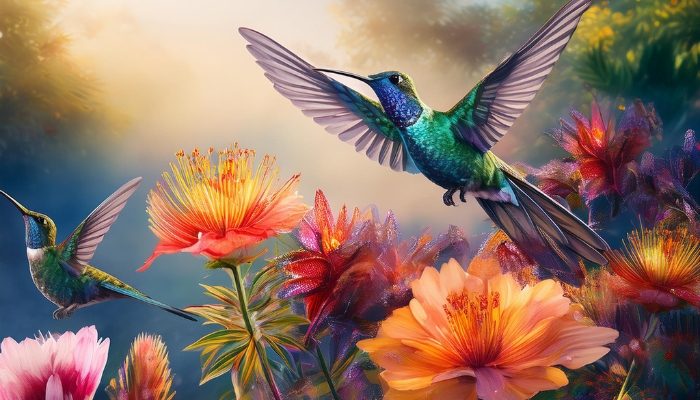
Imagine sipping your morning coffee as you catch a glimpse of tiny, vibrant hummingbirds fluttering around, their wings beating so fast they seem to blur. There’s something undeniably magical about these creatures. The moment they grace your garden, you feel like nature has gifted you a rare, beautiful moment. It’s a dance of color, life, and energy that fills your space with joy.
Why Attracting Hummingbirds is a Magical Experience
Attracting hummingbirds isn’t just about having a beautiful garden. It's about inviting a sense of wonder and connection with nature. These tiny birds are not just pollinators; they’re symbols of endurance, joy, and beauty. Creating a haven for them brings a piece of the wild into your daily life, making every garden visit a bit more special. When they come to your garden, it’s as if your space has been chosen by nature itself.
How Choosing the Right Flowers Creates a Hummingbird Haven
The secret to attracting hummingbirds lies in your choice of perennial flowers. Their nectar needs to be rich, their colors vibrant, and their blooms shaped just right to match the bird’s long, thin beak. By selecting the right flowers, you create not just a garden, but a sanctuary that sustains these beautiful creatures.
The Beauty of the Flower-Hummingbird Connection
The Symbiotic Relationship Between Flowers and Hummingbirds
Hummingbirds and flowers share a special bond. Flowers provide the sweet nectar that fuels the hummingbirds' high-energy lives, while the birds, in turn, help the Flowers to Attract Hummingbirds pollinate and thrive. It’s a partnership built over millennia—nature’s way of ensuring both survive and flourish.
How Hummingbirds Feed: Nectar’s Role in Their Survival
Nectar is the lifeblood of hummingbirds. Their high metabolism requires frequent feeding, and they can consume more than their body weight in nectar each day! Types of Flowers with tubular shapes and bright colors make it easy for hummingbirds to feed, allowing them to dip their long beaks into the blooms for a quick energy boost.
Colors That Appeal to Hummingbirds: Why Reds and Bright Shades Work Best
Bright colors, especially reds, are like beacons for hummingbirds. Their vision is uniquely tuned to spot these hues, making red, orange, and pink flowers irresistible to them. Adding a splash of these colors in your garden ensures your flowers are easy to spot and hard for hummingbirds to resist.
Creating a Welcoming Environment for Hummingbirds
Essential Tips to Make Your Garden Hummingbird-Friendly
While flowers are key, creating an overall welcoming environment is crucial. Hummingbirds need a safe space to feed, rest, and nest. Offer shelter through dense shrubs or trees, and provide a water source, like a fountain or mister, to keep them refreshed.
Designing Your Space with Native Plants and Flowers
Native plants are often best suited for attracting local hummingbird species. They’re adapted to the climate, soil, and ecosystem, meaning they require less maintenance and thrive more naturally. Plus, native flowers have evolved alongside hummingbirds, making them particularly appealing.
How to Provide Shelter and Resting Spots for Hummingbirds
Don’t just focus on flowers—think about where hummingbirds can rest after a long flight. Include small, protected perches where they can rest, and consider planting taller plants or placing bushes nearby to provide shelter from predators.
Top 10 Flowers That Attract Hummingbirds
1. Trumpet Vine (Campsis radicans)
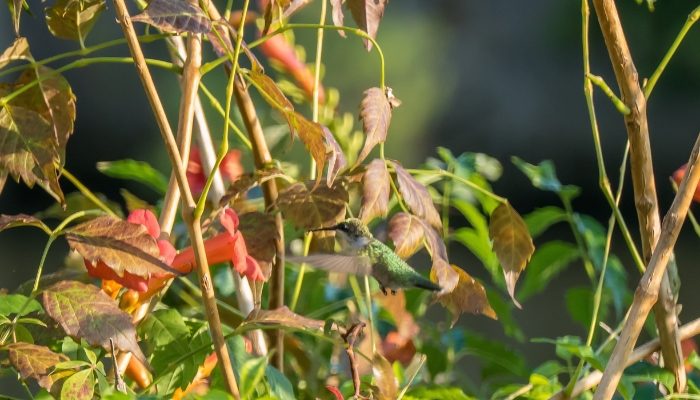
Trumpet vine is a favorite among hummingbirds due to its large, tubular blooms and bright colors. The flowers are perfect for the hummingbird’s slender beak, making it an ideal nectar source.
- Why Hummingbirds Love Its Tubular Blooms: The deep, trumpet-shaped flowers hold ample nectar that hummingbirds can easily access.
- Care Tips: Trumpet vines thrive in full sun with well-drained soil. Be cautious, as they can grow aggressively.
- Potential Growth Issues: They need regular pruning to prevent them from overtaking other plants.
2. Red Columbine (Aquilegia canadensis)
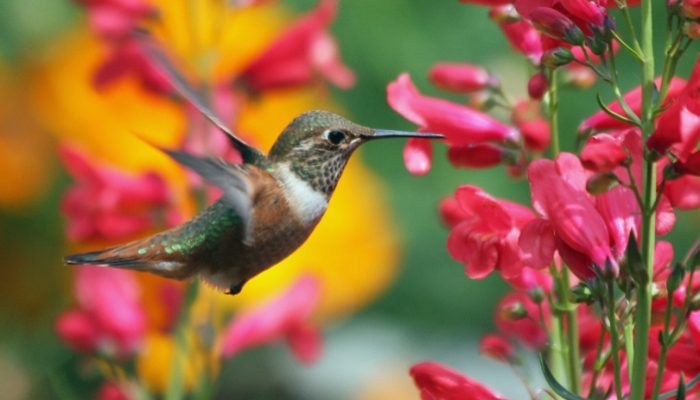
This early bloomer is an excellent source of nectar for hummingbirds returning from migration.
- How Red Columbine Provides Early Spring Nourishment: As one of the first blooms in spring, it offers vital nourishment when food is scarce.
- Planting Conditions: Plant in partial shade with moist, well-drained soil.
- Pairing Columbine: Combine with late-blooming flowers to ensure a consistent food supply.
3. Bee Balm (Monarda)
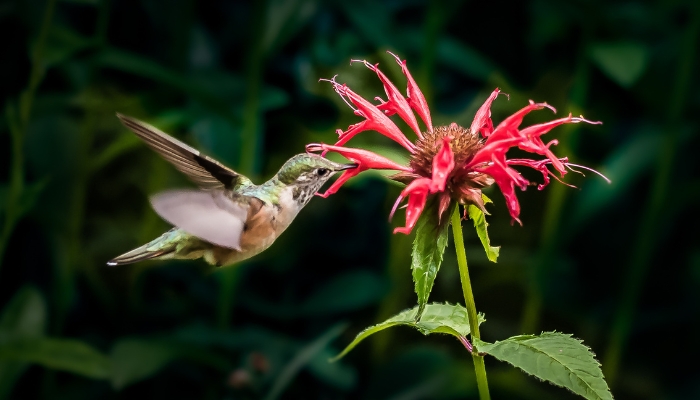
Bee balm is a magnet for hummingbirds, butterflies, and bees. Its fiery red blossoms are a treat for the eyes and a feast for hummingbirds.
- Bee Balm: A Magnet for Hummingbirds: Its open blooms make it easy for hummingbirds to feed on nectar.
- Growing Bee Balm: Needs full sun and moist soil; it's prone to mildew, so good air circulation is key.
- Best Varieties: ‘Jacob Cline’ and ‘Raspberry Wine’ are particularly attractive to hummingbirds.
4. Cardinal Flower (Lobelia cardinalis)
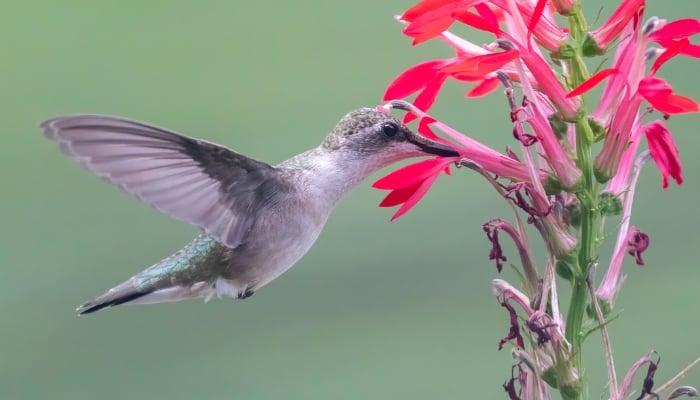
This native plant’s bright red flowers make it a hummingbird favorite.
- The Striking Red Hue That Draws Hummingbirds Instantly: Its bold color and tubular shape make it a perfect feeding flower.
- Cardinal Flower’s Preference: Grows best in moist soil, ideal for rain gardens.
- Water Garden: Consider planting near a pond or water feature.
5. Salvia (Salvia spp.)
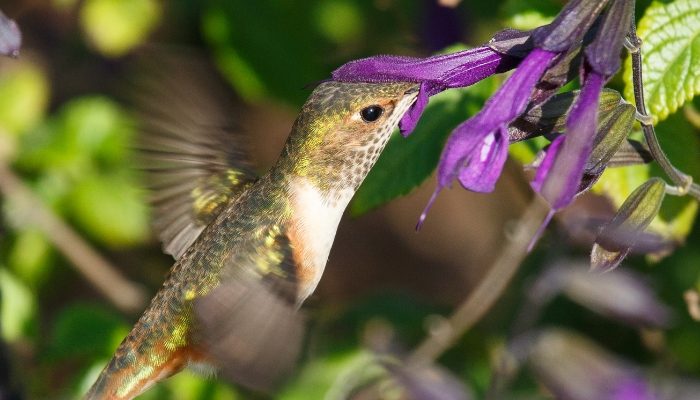
Salvia’s long bloom time and rich nectar make it irresistible to hummingbirds.
- Salvia’s Long Blooming Season: Blooms from spring to fall, providing a consistent food source.
- Care Tips: Plant in full sun with well-drained soil.
- Companion Plants: Pair with sunflowers or zinnias for an eye-catching display.
6. Coral Honeysuckle (Lonicera sempervirens)
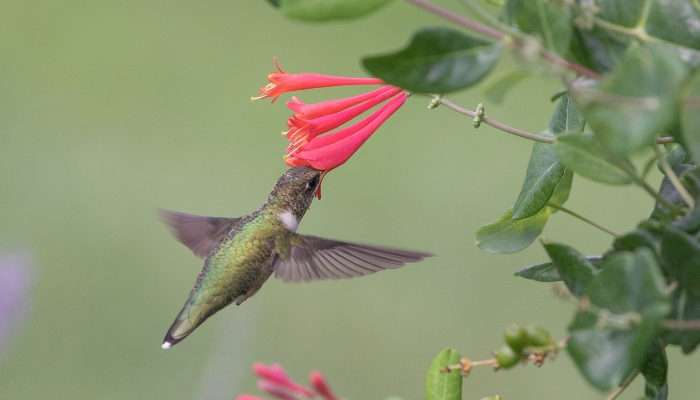
This fragrant vine is a hummingbird paradise.
- Sweet Fragrance and Nectar-Rich Blooms: Its fragrance attracts hummingbirds from afar.
- Training Honeysuckle: Grow on a trellis or fence for best results.
- Native vs. Invasive: Stick to native varieties to avoid the invasive tendencies of some honeysuckles.
7. Fuchsia (Fuchsia magellanica)
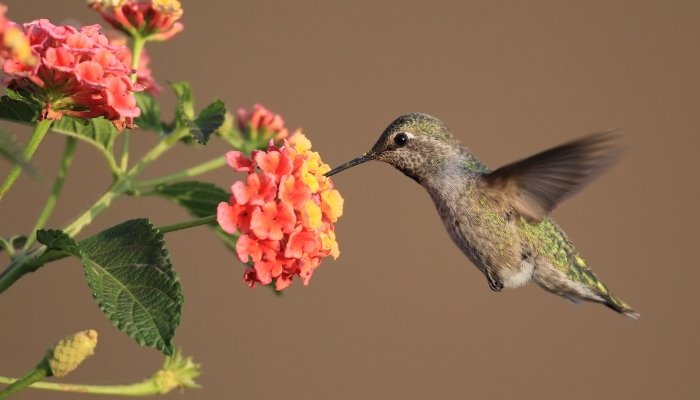
The hanging blooms of fuchsia are perfect for container gardens and attract hummingbirds even in shady spots.
- Hanging Blooms: Their drooping shape allows easy access for feeding.
- Best Practices for Growing Fuchsia: Thrives in cool, shaded areas; avoid overwatering.
8. Butterfly Bush (Buddleia davidii)
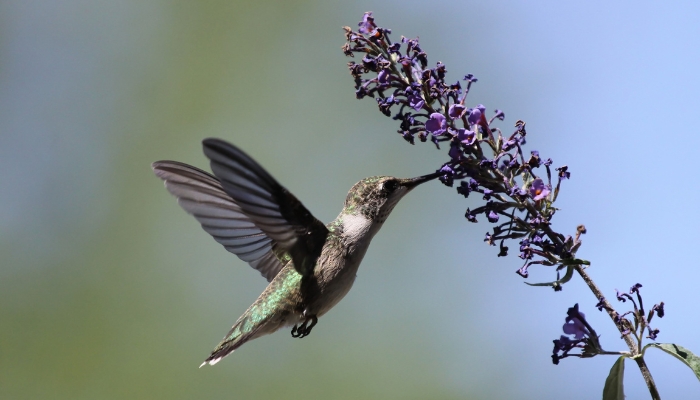
Beyond butterflies, this bush is also a hit with hummingbirds.
- Supports Pollinators Beyond Hummingbirds: Its abundance of nectar is perfect for pollinators.
- Pruning Tips: Regularly prune to encourage more blooms and prevent legginess.
9. Penstemon (Penstemon spp.)
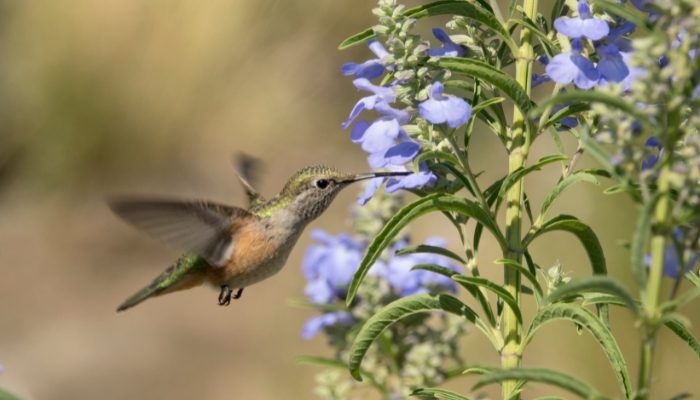
Penstemon’s tube-shaped flowers are a hummingbird favorite.
- Tube-Shaped Flowers: Designed for hummingbirds’ long beaks.
- Care Guide: Thrives in dry, well-drained soil with plenty of sunlight.
10. Zinnia (Zinnia elegans)
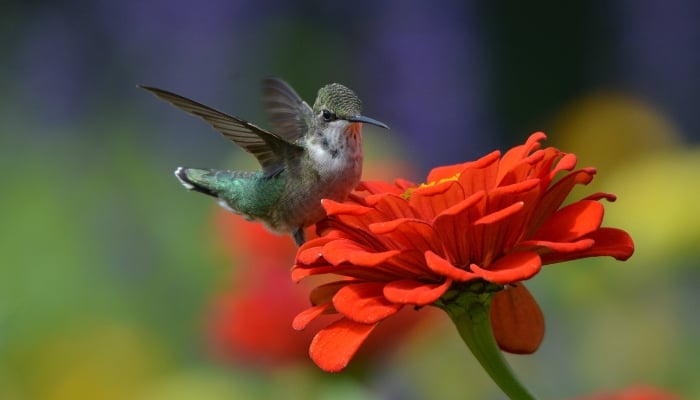
Bright and bold, zinnias are a surefire way to attract hummingbirds.
- Zinnias: Bright, Bold, and Impossible to Ignore: Their vivid colors make them stand out to hummingbirds.
- Easy to Grow from Seeds: Ideal for beginners, zinnias grow quickly and require minimal care.
Tips for Maintaining a Thriving Hummingbird Garden
- Water Sources: Hummingbirds love to bathe, so adding a fountain or mister can keep them coming back.
- Deadheading Flowers: Regularly deadhead spent blooms to prolong the blooming period.
- Organic Fertilizers: Use organic options to avoid harmful chemicals that could deter hummingbirds.
Complementing Your Flowers with Hummingbird Feeders
Even with plenty of flowers, feeders offer a reliable food source.
- Choosing the Right Feeder: Opt for red feeders to attract hummingbirds.
- Homemade Nectar Recipes: Mix 1 part sugar with 4 parts water—no need for dyes!
- Cleaning and Maintaining: Clean your feeder every few days to prevent mold and bacteria buildup.
Attracting hummingbirds to your garden is about more than just beauty—it’s about creating a space where nature can thrive. The joy of seeing these tiny, energetic birds dart from flower to flower fills your garden with life and wonder with order flowers for delivery. By planting the right flowers, providing water, and ensuring a welcoming environment, your garden will become a hummingbird haven. As you nurture this space, you'll find that the emotional connection between you, your garden, and these birds grows deeper with every flutter of their wings.
Flowers’ Benefits for Hummingbirds
There’s something magical about the way hummingbirds flit gracefully from flower to flower, their iridescent wings humming like a gentle melody in the breeze. It’s almost as if nature has orchestrated this dance, with flowers as the perfect partner in their symphony of life. But what many don’t realize is that the relationship between flowers and hummingbirds is more than just a beautiful sight – it’s a vital bond that nourishes both creatures in the most heartwarming way.
A Match Made in Nature’s Heaven
Flowers and hummingbirds share a connection that goes beyond their delicate appearances. For the hummingbird, flowers are a life source, offering the sweet nectar that fuels their endless energy. And in return, these tiny birds help the flowers in a dance of pollination, ensuring that life continues to bloom. The vibrant petals, the nectar-rich centers – they are calling cards that beckon hummingbirds to pause and sip, to refuel before their rapid wings carry them to the next bloom.
Imagine a summer day, the sun warm on your skin, and the air filled with the soft hum of a hummingbird. As it hovers near a trumpet vine or a bright red hibiscus, it’s not just feeding – it’s taking part in a relationship that’s been blossoming for centuries. The sight alone is enough to make your heart swell.
Fuel for Their Journey
For hummingbirds, flowers are essential for survival. The nectar provides a rich source of sugar, which these tiny birds rely on for the intense energy needed to power their incredibly fast wing beats – sometimes up to 80 beats per second! Without the energy-rich nectar flowers provide, their journey would come to a halt.
Flowers like the Bee Balm, Columbine, and Salvia offer nectar that’s perfectly suited to a hummingbird’s needs. Their tubular shapes make it easy for the hummingbird’s long bill to reach the sweetness inside, and their vibrant colors – especially red, orange, and pink – are irresistible to these feathered jewels.
It’s as if nature knew that such delicate creatures deserved something as beautiful and life-giving as flowers to sustain them.
The Art of Pollination: A Love in Bloom
As hummingbirds feed, they are unknowingly spreading pollen from one flower to the next, helping with pollination and ensuring the continuation of life. The beauty of this symbiotic relationship is heartwarming – hummingbirds get the nectar they need to thrive, while flowers rely on them to carry their genetic material far and wide and send online gifts to your loved onces.
Without hummingbirds, many plants would struggle to reproduce. It’s not just a dance of survival, but one of creation – a tender exchange where the hummingbird becomes the unseen hand that helps new life take root. In a way, hummingbirds become nature’s messengers of love, spreading life wherever they go.
A Sanctuary of Beauty for the Soul
Watching a hummingbird interact with flowers is not only beneficial for the birds and the blooms – it’s deeply nourishing for the soul. There’s a serenity in seeing such a fleeting, delicate moment unfold before your eyes. The beauty of it is like a reminder from nature that even the smallest of creatures can bring profound joy, that even the simplest acts – like sipping nectar – can be filled with grace and purpose.
As you tend to your garden, knowing that the flowers you plant can provide sustenance and shelter to these tiny wonders, your heart swells with the satisfaction of giving something back to nature. By planting Trumpet Creepers, Fuchsia, or Honeysuckle, you’re not just filling your garden with color and fragrance – you’re creating a haven for hummingbirds, a safe place where they can thrive and continue their extraordinary journey.
A Gift of Hope and Renewal
In many ways, the relationship between flowers and hummingbirds is a gentle reminder of hope. Even in the smallest, quietest moments, life finds a way to renew itself, to blossom, to flourish. When a hummingbird pauses mid-flight to sip from a flower, it’s a moment of stillness, a reminder that no matter how fast-paced or fleeting life feels, there’s always time to pause, to appreciate, to find beauty in the simple and the small.
In that moment, the world seems to slow down, and you’re reminded that nature’s love story continues all around us, every day with international gifts. The flowers give their nectar, the hummingbirds give their pollination, and we are left with a feeling of awe – a deep, emotional connection to the world that whispers of beauty, grace, and renewal.
A Love That Never Fades
The bond between flowers and hummingbirds is timeless, a love that blooms endlessly. Every flower that opens its petals to the sky and every hummingbird that hovers near is part of a story that’s been unfolding for centuries – one filled with beauty, life, and harmony.
And as you watch them, whether in your garden or out in nature, you can’t help but feel that love too. It’s a love that nourishes, a love that inspires, and a love that will forever remind us that in the grand scheme of things, even the smallest creatures and the simplest acts are capable of bringing so much joy into the world.
| Countries where we Deliver: | Cities where we Deliver: |
| Send Flowers to Canada | Send Flowers to Saintbruno Canada |
| Buy Flowers from UK | Buy Flowers from Brighton Michigan USA |
| Send Flowers to Germany | Send Flowers to Schwaigern Germany |
| Buy Flowers from Australia | Buy Flowers from Glen Iris Australia |