
Aconite - A Small Herbaceous Eurasian Plant
Published · Flower Resource
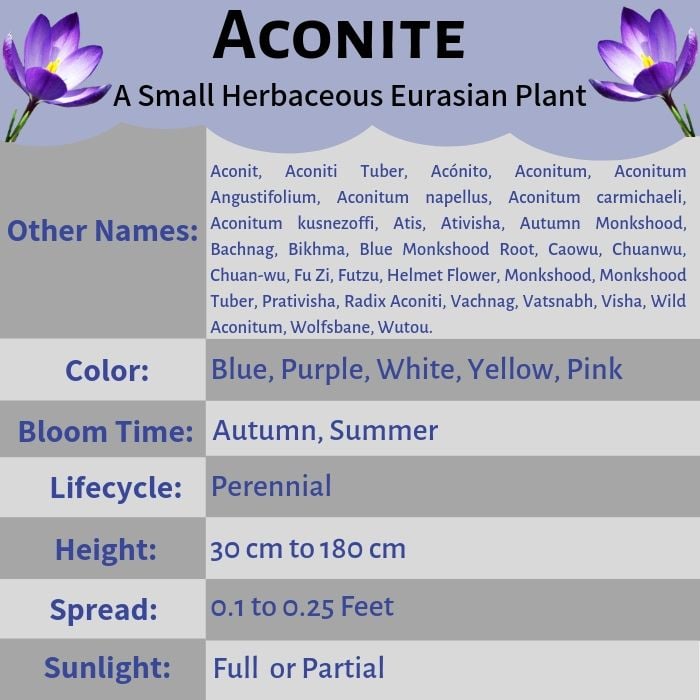
Arriving from Ranunculaceac Family and scientific name is Eranthis Hyemalis. These are one of the first flowers to bloom in spring season. They have attractive green foliage and are cheerful yellow blooms. Aconite flowers are grown as mass plantings in large landscapes. They are native to southern Europe. They are perennial and easy to take care of. These are tall and upright plants that blooms in summer and autumn. The flowers are hood shaped and spike like clusters.
The name Aconite is the English form of its Latin and Greek name. It represents death, caution and misanthropy so be careful when you offer these flowers to someone.
Uses of Aconite
- Flowers can be used for naturalistic garden.
- Some people take aconite for heart problems, skin diseases, hair loss, joint pain, finger numbness and for cold hands and feet.
- It is also used as disinfectant to cure wounds and also to promote sweating.
- Earlier these flowers were used to harm other people and animals.
- In ancient times it was used to poison arrows and spears and today it is used to poison shrapnel and bullets.
Interesting Facts
- They are non aggressive and non invasive.
- The blooms have sweet and honey like scent.
- The flower blossoms above foliage but are mostly stem less.
- The root of the plant is used as medicine.
- The flower is very poisonous.
- Nazis uses Aconite treated bullets to make the bullets poisonous and cause intense suffering.
- It is said Cleopatra killed herself consuming a poisonous cocktail containing Aconite.
- In India this plant is considered sacred to Lord Shiva.
Soil Needed
- The plant requires well drained soil and prefers rich and moist soil.
- It requires full to partial sunlight.
- The Ph level of the soil is should be between 5 and 6.
- The soil is to be slightly acidic.
- They reach the height of 3 to 5 feet and spread around 1 to 1 and half feet.
How to Plant?
- You can propagate these plants by division or separation.
- You can divide once the flowering has stopped but leaves are present.
- Plant the tuber 1 to 2 inches below soil surface and plant them after flowering in spring.
- Sow them direct if possible because they do not like to be transplanted.
- They may take a year or so to germinate from seed.
- Add plenty of organic matter before sowing the seeds so that soil becomes fairly rich in nutrients.
Maintenance & Care
- You dried tubers by soaking them in water overnight and also keep them in moss for 3 to 4 days and then plant.
- They are very low maintenance plants as they are late season bloomers.
- Start with rich nutritive soil, so you do not have to regularly fertilize the soil, still fertilize the plant each spring.
- Water the plant regularly though it can withstand the short periods of droughts.
- It takes long time to get established, then they live very long.