
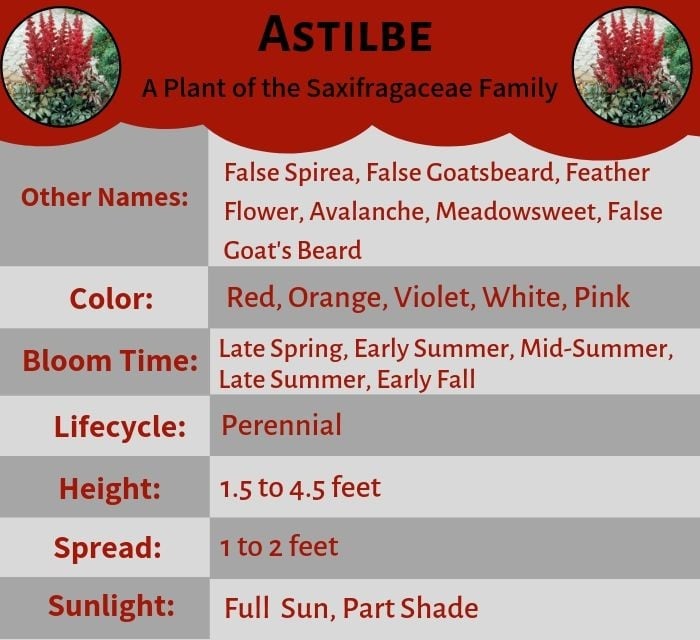
Astilbe – A Plant of the Saxifragacea Family
Published · Flower Resource
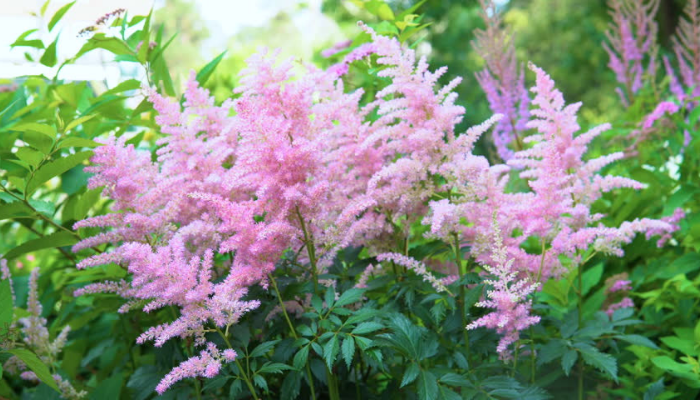
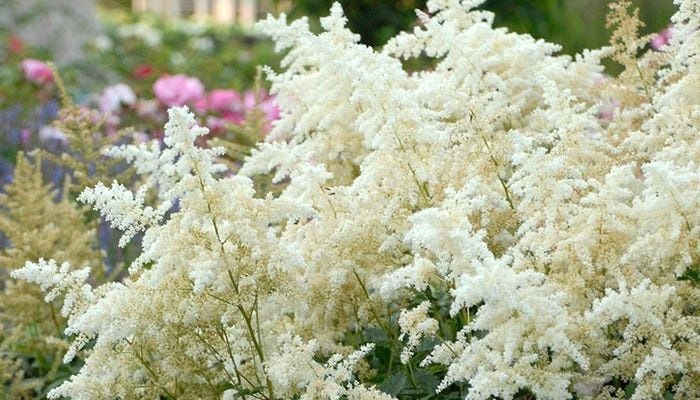
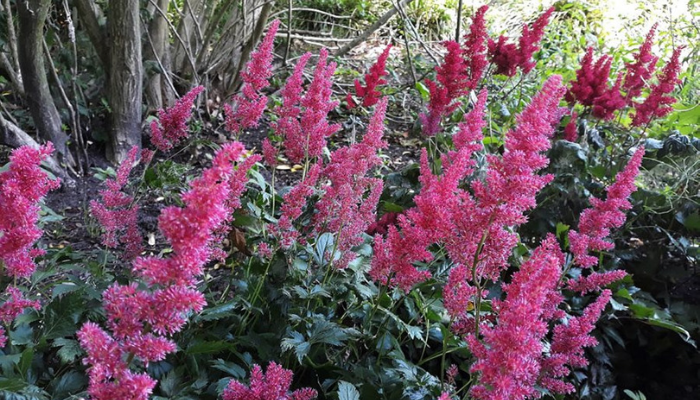 They are very delicate plants with long, fern like flowers that can withstand damp soil. They grow between one to six feet in height. And add perfect pop to your garden with due to its vibrant color. This plant is a summer flowering perennial and commonly called Feather flower or Avalanche. They belong to Saxifragacea family, which has tiny lacy flowers. They can thrive well in woodland gardens. They are native to areas of China and Japan and later introduced in United States.
These plants represent dedication and patience and can convey the message, ‘I will still be waiting’ to your lover. They are used by lovers to confess their love to their beloved.
Uses of Astilbe
- They are good for cut flowers.
- They are perfect perennials for a shady border.
- They are excellent fresh cut flowers and can also be used dry in natural bouquets.
Interesting Facts
- They are deer resistant and very hardy.
- They attract butterflies.
- There are about 25 species of Astilbe.
- They bloom between late spring and late summer.
- They have attractive foliage and remain gorgeous all season long.
Soil Needed
- They require well drained and loamy soil.
- The soil should have high fertility.
- The soil should be neutral with slightly acidic with PH of 5.5 to 6.8.
- It requires full shade to part shade and prefers moist conditions.
How to Plant?
- They can be propagated by division in spring or autumn.
- You can plant divisions in fall or spring some 3 feet apart.
- They are easy to grow but their biggest enemy is dryness.
- You can also sow Astilbe seeds but they are very difficult to germinate and short lived.
- The site where you plant this requires light to moderate shade as they will get burned in full shade.
- Make sure the soil is humus rich and moist when you plant the divisions.
Maintenance and Care
- They are relatively trouble free and also easy to maintain.
- The plant will be benefitted if you provide organic fertilizers in spring.
- If you remove flower heads, it will hamper continued flowering.
- Trim the leaves after the frost, so there will be fresh growth in next spring.
- Clip off spent flower stem after blooming is finished after blooming is finished for the season.
- Check regularly that the soil is moist and if does not rain, water deeply when you water.
Types of Astilbe
Astilbe: Chinese Chinese Astilbe is gorgeous rich rose and purple flowers planted in mass to create dramatic effects. They are also wonderful cut flowers and herbaceous. They have showy flowers that bloom from early summer to midsummer. Thus they are one of the most outstanding perennials. Astilbe: Hybrid These flowers are also one of the most popular plants with feathery plumes of tiny blooms available in so many different shades. Varieties of these flowers also have wide range of foliage color and size. They bloom from late spring to late summer.