
Aubrieta – A Plant of the Brassicaceae Family
Published · Flower Resource
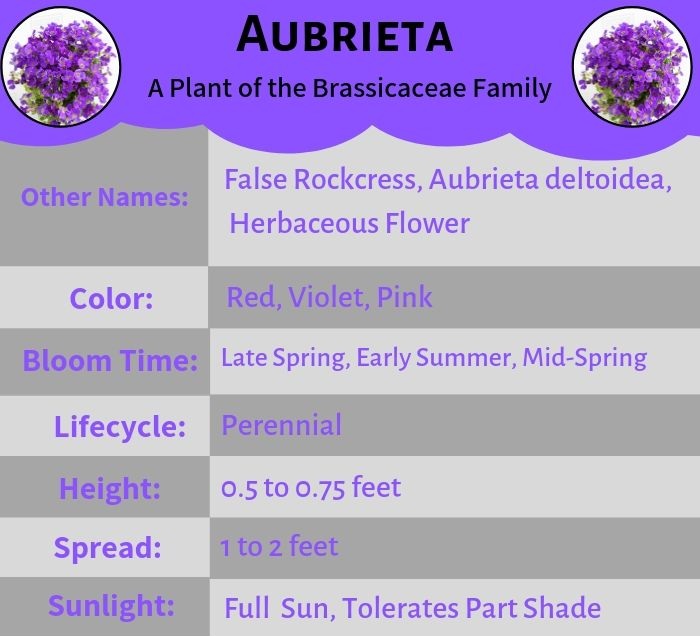
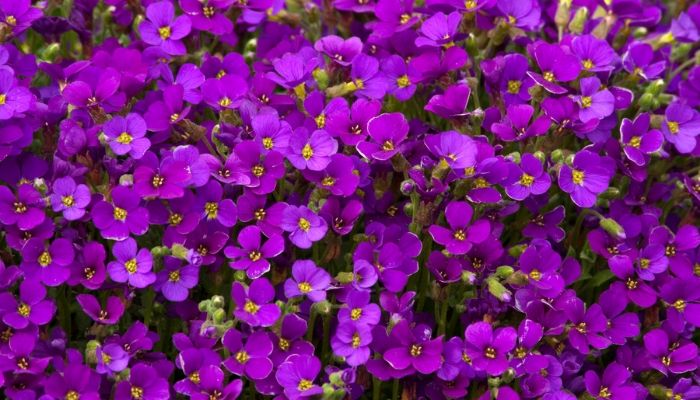 Aubrieta are small violet, pink and white flowers that are spread low. They are great for creating rock gardens. They are of 0.5 to 0.75 feet in height. They are named after a famous French artist Claude Aubriet who painted them. They belong to Brassicaceae Family and also known as False Rock cress. They are herbaceous perennial flower. These flowers are also great to plant for front borders. They spread up to 1 to 2 feet. They are available in red, pink and violet colors with medium gray green foliage. Their shape is low and trailing. They are evergreen and native to South Eastern Europe but are grown worldwide as an ornamental plant.
Aubrieta are rigorous and eye catching plants that represents wealth, fortune and prosperity.
Uses of Aubrieta
- This plant is used as ground cover that looks like a carpet of delicate flowers.
- Medicinal uses of this plant are not known.
- This plant covers rocks and other inorganic items with its cover and distracting the onlooker’s eyes.
- The fruit of this plant is not ornamental important.
- They are a good choice to attract butterflies in your garden or backyard because of its colorfulness.
- They are used for following landscapes
- Border Edging
- Ground-cover
- Rock or Alpine Gardens.
Interesting Facts
- They are non invasive and non aggressive.
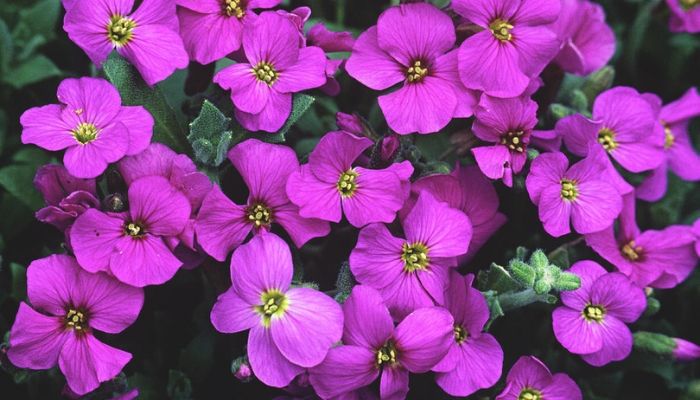
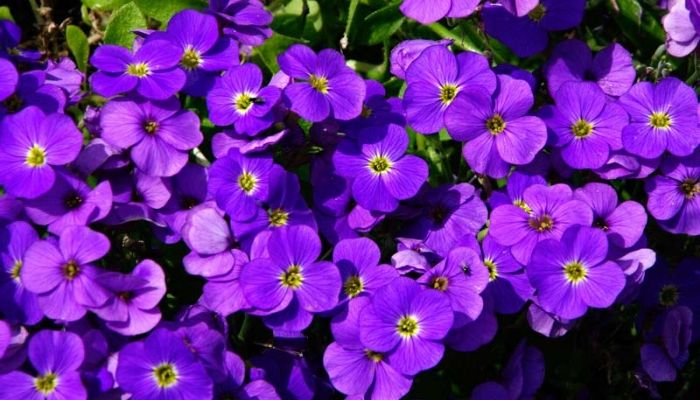
- Different varieties of this plant are Aurea Variegata that has purple blue blooms, Barker’s Double that has double blue purple blooms, Campbellii that has double pinkish purple blooms, Parkinsii with rosy purple flowers and white eyes and many other such varieties of these flowers.
- They are deer resistant.
- Aubrieta is planted with tulips as they look very gorgeous together.
- Bees love these flowers.
- Other good varieties of this plant are Red Cascade, Doctor Mules, Royal Blue etc.
Soil Needed
- They require well drained and highly fertile soil.
- The soil should also be rich in lime.
- It prefers sandy and rocky soil.
- It requires full sun and tolerates part shade.
How to Plant?
- They are propagated by seed, division, cuttings and separation.
- Cuttings are most successful than any other way of propagation.
- You have to take semi ripe or softwood cuttings from early to mid summer and remove the lower roots and leaves in sand so that the plant will get proper nutrition.
- In the case of seeds, purchased seeds are more effective than saved seeds.
Maintenance and Care
- To encourage healthy foliage growth and secondary blooms, cut the plants back severely to prevent seeding after flowering.
- Remove the damaged foliage in spring and so not prune in fall.
- This Easy care plant is adapted to partial shade sites and is one of the toughest groups of plants.
- The plant will be short lived if the drainage is poor or weather is hot so divide the plant every 1 to 3 years.
- Choose a sunny spot in your garden or backyard in early spring to sow the seeds of this plant.