
Autumn Snakeroot – A Plant of the Ranunculaceae Family
Published · Flower Resource
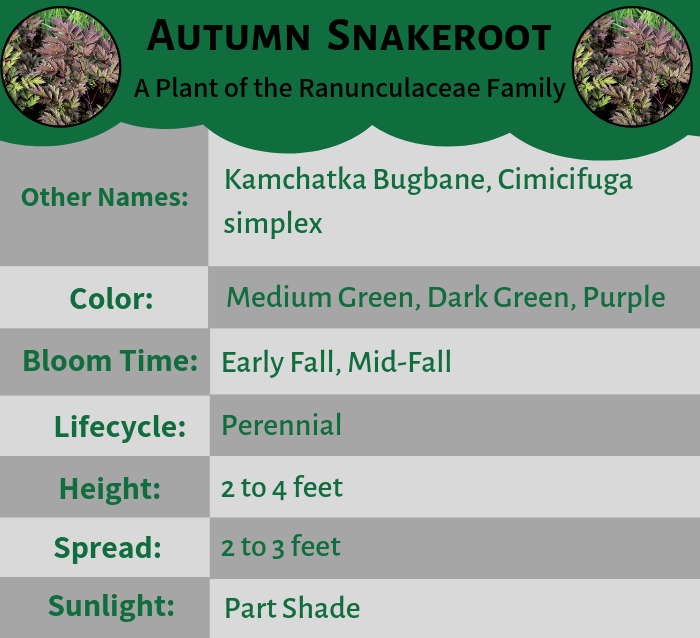
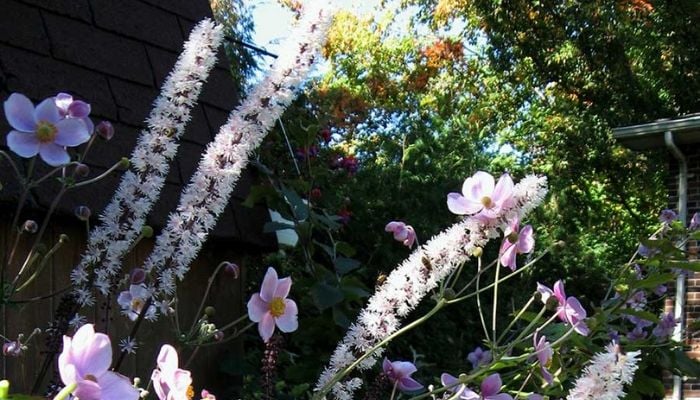
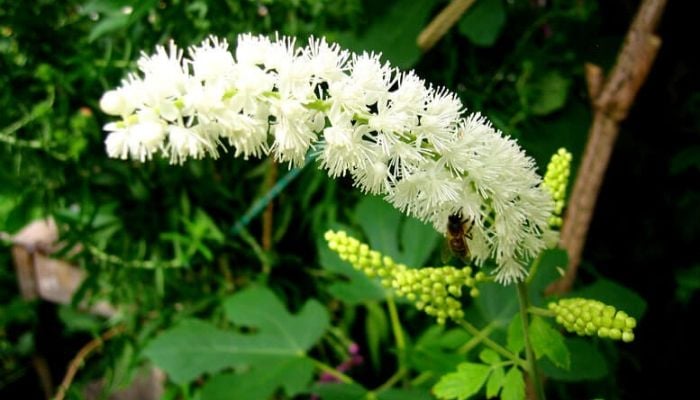
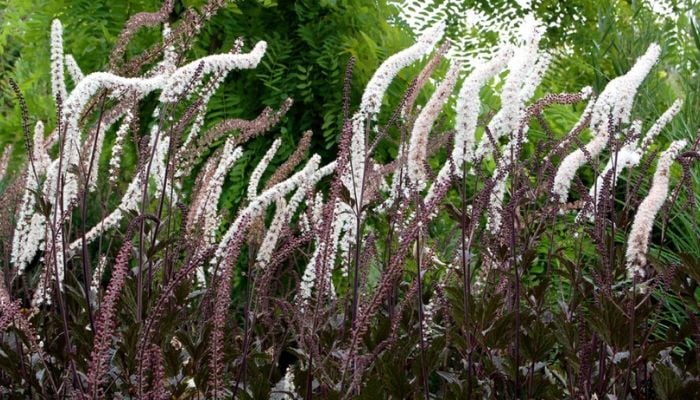 This is an herbaceous perennial flower and also known as Kamchatka bugbane. This plant belongs to Ranunculaceae Family and its scientific name is Cimicifuga simplex. The plant is a foot tall with feathery spikes and starry white blooms that has purple and green fern like foliage. The plant is 2 to 4 feet high and spreads up to 2 to 3 feet. They bloom during early fall to mid fall. The flowers are dreamy white in color. It has medium foliage and sometimes flushed with purple color. The stems gracefully arch and flowers rise just above the foliage. Flowers are upright and shaped like cushion, mould or clumps. They are native to Russia, China, Korea and Japan. Though these plants are poisonous yet they are medicinal. Thus different meanings are connected to the plants according to each of its varieties and species.
Uses of Autumn Snakeroot
It can make a statement with its black dress of plants in any garden or ground cover. It is a perfect natural addition to any modern woodland garden. It has many uses in alternative medicine and is used especially to treat problems due to menopause. It also helps in curing joint pain, liver problems, fever, insomnia, high blood pressure, mental disorders such as schizophrenia etc.
Interesting Facts
- It tolerates heat and alkaline soils.
- They are deer resistant.
- They are non aggressive and non invasive.
- Different varieties of this plant are Braunlaub that is 2 to 3 feet tall and green purple foliage, Brunette has dark purple leaves and purple and cream tinted flowers, Elstead also grows 2 to 3 feet tall and have purple brown to pure white flowers and last are white pearl dense white flowers.
Soil Needed
- It requires well drained soil.
- The soil should have high fertility and also tolerate poor drainage.
- It mostly prefers moist, acidic and rich soil.
How to Plant?
- They can be propagated by division or separation.
- You can divide the plant carefully in spring or fall but not before three years of planting.
- The division is sometimes tough due hard, snake like roots.
- You can also sow seeds in containers in cold frame in fall season so that it can germinate in coming spring.
- Division is hardly required as clumps remain undisturbed.
Maintenance and Care
- Late blooming plants are susceptible to early fall frosts.
- They are easy to take care.
- You have to take care of the plant from Tarnishes plant bug and diseases like Rust and leaf spots.
- Keep the plant away from direct sunlight and soil should be moist so the foliage does get burned.
- Seed heads should be left on plants for fall and winter interest later to cut back in spring.
- Plants grow very slowly so they rarely require division.
- If you want to divide, divide carefully in spring or fall.
- Only white peal one of the plant varieties does not require staking rest all flower stalks require staking.