
Bush Morning Glory - A Plant of Convolvulaceae Family
Published · Flower Resource
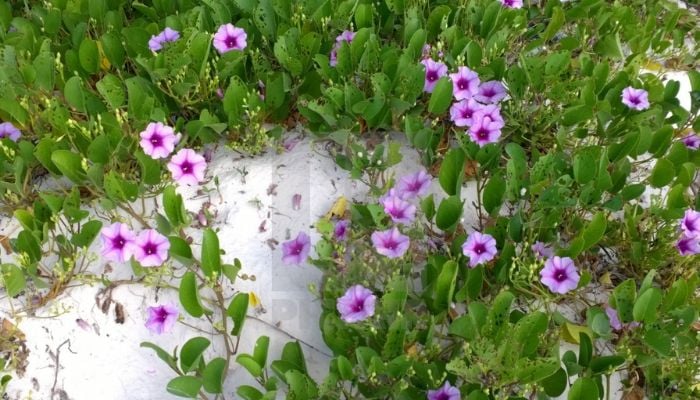 Scientific name of this Morning Glory plant is Ipomoea that means worm like which refers to the worm shaped stem of the plant. They originate from the tropical parts of South, central and North America and also tropical and sub tropical parts of Asia. It has more than 1000 species of and at least 10 genera. The flowering plant belongs to the Convolvulaceae family. Morning Glory signifies unrequited love and affection. These plants are basically annual climbers with slender stems.
The morning glory signifies love, affection and mortality from the Victorian meaning of flowers. In Chinese folklore these flowers represent single day for the lovers to meet and unite. The flowers also represent the 11th wedding anniversaries.

Uses of Bush Morning Glory
- These plants are cultivated near arches, walls and stems.
- Some of its varieties are also cultivated as ground cover.
- Seeds of this plant are also used as laxative in traditional Chinese medicine.
- People cultivate this plant for ornamental purposes and also as source of food.
- They are also recommended for anti diabetic medication by Chinese herbalists.
- Native Americans apply the crushed flower as an antidote for spider bites.
- This flower therapeutically combats the effects of stress and makes people feel calm and peaceful.
- It is also believed that the plant has antibacterial and anti fungal properties.
Interesting Facts
- This plant produces heart shaped green leaves.
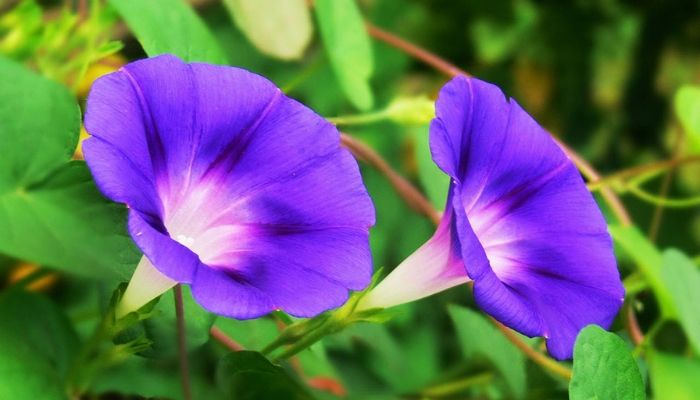
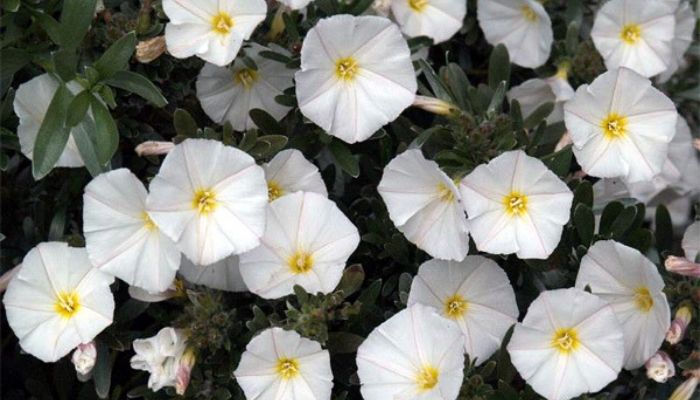
- It produces flowers in different colors like white, orange, red, pink, purple or blue colored that are large and trumpet shaped flowers.
- This flower is named Morning Glory because it opens in morning and closes in afternoon.
- The fruit of morning glory is round seed pod are arranged in drooping clusters.
- They can survive one year long in areas with cold climate and more than one year in frost free areas.
- The seeds of this plant are dark brown to matte black colored and wedge shaped.
- Their wide and beautiful flowers attract butterflies and hummingbirds.
Soil Needed
The soil should not be too moist and fertile but it should be planted in full sun. Thus they will grow better if the soil is not too rich in organic matter. The neutral soil with Ph of 6 to 6.8 is required for this plant. If you find the vines struggling later you can amend the soil.
How to Plant?
- Plants can be propagated via seed and cuttings.
- Soak the seeds overnight so that it will absorb water and germinate more quickly.
- Sow the seeds half inch inside the ground and some 8 to 12 inches apart and so the twine is supported.
- These plants usually do not survive transplanting.
Maintenance and Care
- These are low maintenance plants that produce beautiful flowers.
- Provide good support system to the new vine.
- Do not over-water the plants.
- Remove all dead vines once killed by frost to reduce their reseeding capability.
- These plants are excellent re-seeders so you do not have to replant them.