
Cotoneaster - A Plant of the Rosaceae Family
Published · Flower Resource
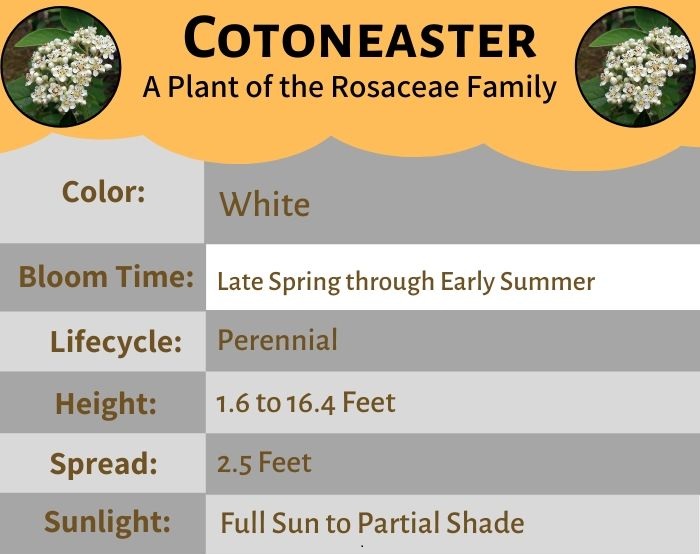
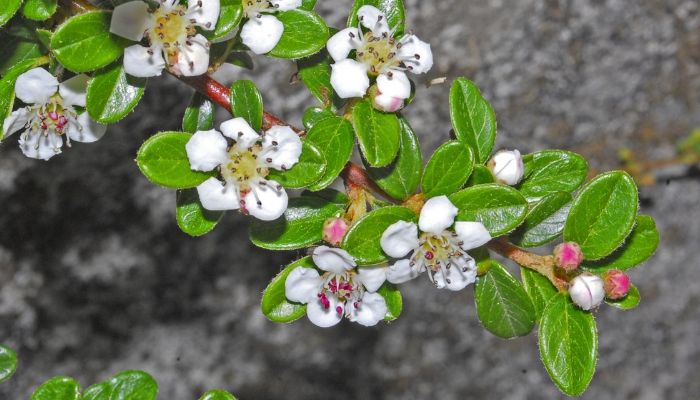
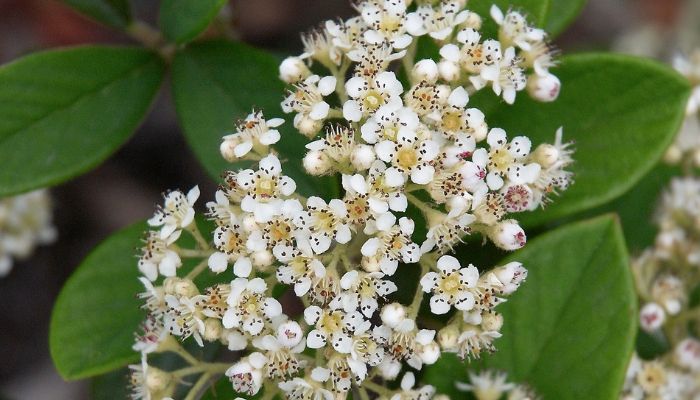 Cotoneaster belongs to Rosaceae family and is a beautiful shrub especially appreciated for its berries. This plant is native to temperate parts of Europe, Asia and Africa but today it can be found all around the world. The cotoneaster has dark green or gray leaves that can be elliptical, ovate or lanceolate in shape. It produces numerous branches in crisscross manner and the stem of young plants is usually covered in hairs. They bloom from June to September. It is a perennial plant so it can survive for more than two years in wild.
The name cotoneaster originated from Latin words “cotone” that is used to describe quince and “aster” that means resembling. It means quince like shape of the leaves.
Uses of Cotoneaster
- These flowers can make great hedges and are very ornamental.
- They are cultivated in gardens because of its dense foliage and decorative berries.
- They are the important source of food for bees when the nectar has become scare in the wild.
- You can grow cotoneaster in perennial borders and rock garden as a ground cover.
- You can also grow cotoneaster to cover a slope or cascade over a rock wall because it will look very pretty.
Interesting Facts
- Different varieties of cotoneaster are Cranberry cotoneaster, Bearberry, Spreading cotoneaster and Hedge cotoneaster.
- The cotoneaster is covered in red berries at the end of summer and in fall.
- It produces blooms that small and white in color.
- Flowers attract bees and butterflies that are responsible for pollination of this plant.
- Birds eat the fruit and eliminate undigested seeds through feces that help in the dispersal of seeds.
- The fruit of cotoneaster is not used in human diet because contains mildly toxic compounds and it has powdery texture and unpleasant taste.
Soil Needed
- It requires full sun to partial shade and can thrive in the fertile soil.
- It can tolerate any soil as long as it is well drained.
How to Plant?
- It can be propagated through seed and root sprouting.
- It should be ideally planted in fall because it will favor root development.
- Plant conditions are most favorable in mid-November.
- In spring you can plant it in containers and it will require regular watering in the beginning.
- It can be easily multiplies by preparing cuttings.
- Cuttings should be prepared at the end of summer for evergreen varieties and during summer for deciduous species.
Maintenance and Care
- They require watering only during long dry spells and they can do without regular fertilization.
- You should apply a thick layer of mulch around the ground cover soon after planting to suppress weed.
- You can prune cotoneaster shrubs at any time of the year.
- Light pruning is required to control disease and remove wayward branches.
- Hoeing will help the plant restrain weed growth and help in the rain trickle down to roots.
- They are quite resistant when it comes to diseases but can however fall vistim to fire blight.