
Spanish Broom - A Plant of Fabaceae Family
Published · Flower Resource
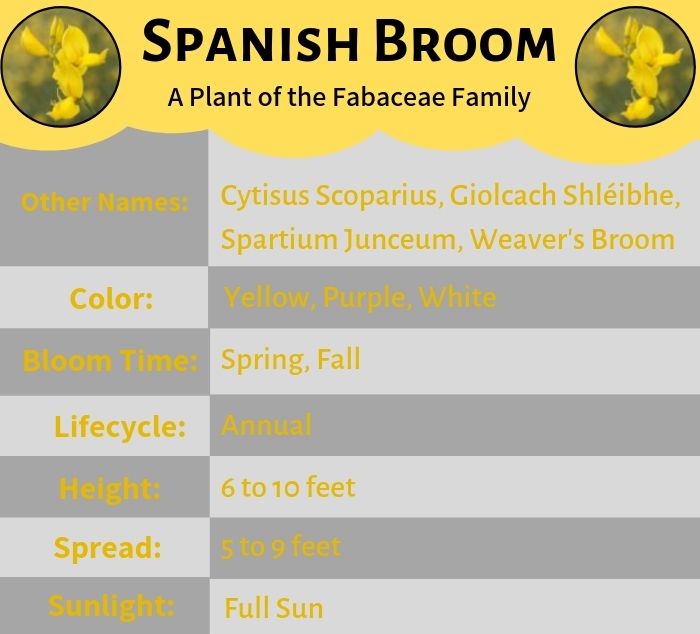
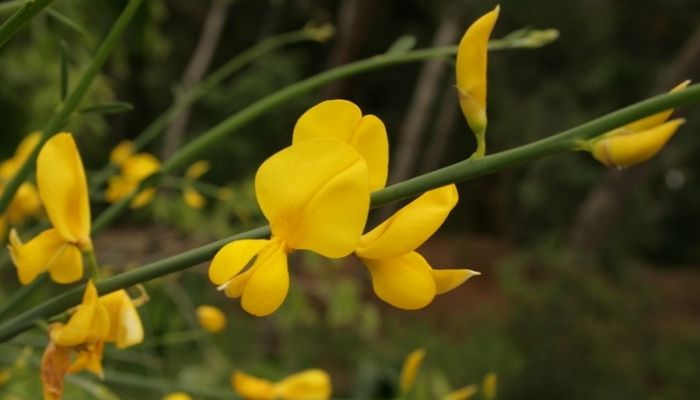
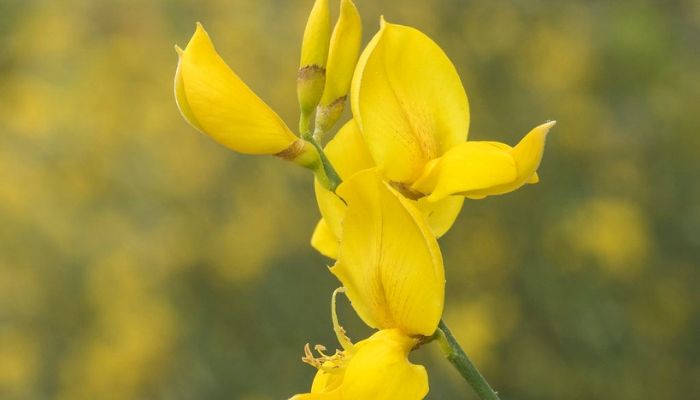 The scientific name of this plant is Spartium junceum and is a flowering plant that belongs to Fabaceae Family. This plant is a genus small tree of pea family and they are native to temperate regions of Europe and western Asia. The scientific name of this plant is Cytisus Scoparius and its common names are English or Scotch. This scrub has bright yellow colored flowers. The flowers are in form of clusters and in different colors like yellow, purple and white. This plant can be deciduous or evergreen plant with three leaflets. This shrub announces the arrival of summer in months of May and June. It is native to Mediterranean regions and also grows in Canary Islands.
The Spanish name of this plant is Spartium that comes from Greek word meaning cardage.
These plants are often used as Royal symbols. It was used as Royal emblem by the Kings of England. In some places of Italy the plant was also burned to stop witches and it was decorated with rosemary at the weddings and used to tame horses.
Uses of Spanish Broom
- These broom species are cultivated as ornamentals because they have very attractive flowers.
- They are grown to control erosion in warmer climates.
- It looks gorgeous when grown in wooden tub and large clay pots.
- Spanish broom is used for flavoring in various foods and beverages.
- It is also used for fragrance in soaps and other cosmetics.
- Spanish broom also works as medicine for curing constipation, fluid retention and other such conditions.
- The leafs are used to produce a dye like indigo by fermenting and is reported as laxative.
Interesting Facts
- It can also survive in greenhouse and conservatory.
- It is often confused with scotch broom flower and scotch broom herb.
- It is unsafe to consume while one is pregnant or breast feeding.
Soil Needed
- It can be grown in poor and well drained soil.
- It requires full sun and thrives best in this.
How to Plant?
- Take suitable spot for planting this plant and after planting water the plant deeply with approximately 4 inches.
- It can be propagated through seeds and cuttings.
- You can sow the seeds in May or April in a propagating try with the help of sandy based compost.
- Once the seedlings are big enough you can pull them out and pot up them in pots.
- Take the cuttings in spring and insert them in ground with the help of rooting compost.
Maintenance and Care
- These plants are low maintenance.
- Prune the shrub periodically in flowering season and hard prune the plant in late winter to control its size.
- But do not cut the old wood from which the new growth appears in spring.
- In summer water moderately and in winter water sparingly.
- Fertilize the soil once a month with standard liquid fertilizer during the growing season.
- If the broom Spanish is properly taken care of, it can live for many years.